


Training
We teach how to manage the skies!
OSPA—the ATS Personnel Training Center—is a training organization certified by the Civil Aviation Authority and part of the Polish Air Navigation Services Agency. Our primary mission is to maintain the competence of all active air traffic controllers and air information service officers, as well as to train new candidates.

A place for those who aren’t afraid of challenges
What matters in this training program is how you respond in situations that require concentration, composure, and logical thinking. Your education and background don’t matter. This is a place for anyone who has the right set of qualities and wants to find out if this is the right path for them. There’s only one way to find out—by taking on the challenge and starting the training.
From Candidate to Independent Operational Role
A specialized team oversees the training process: lecturers, instructors, simulator operators, technical specialists, planning specialists, and the compliance department, which ensures compliance with national and European regulations.
Training to obtain an air traffic controller license or an FIS information specialist certificate is divided into two main stages: initial training and unit-based training.
Initial Training
The introductory training consists of two segments
Basic Training (BASIC)
- Common to all candidates.
- It includes both theoretical and practical components for candidates accepted into the air traffic controller training course, and only the theoretical component for candidates accepted into the FIS course.
- The theory component provides a comprehensive introduction to the world of aviation: aviation law, air traffic management, meteorology, navigation, aircraft, human factors, equipment and systems, the work environment, and aviation phraseology.
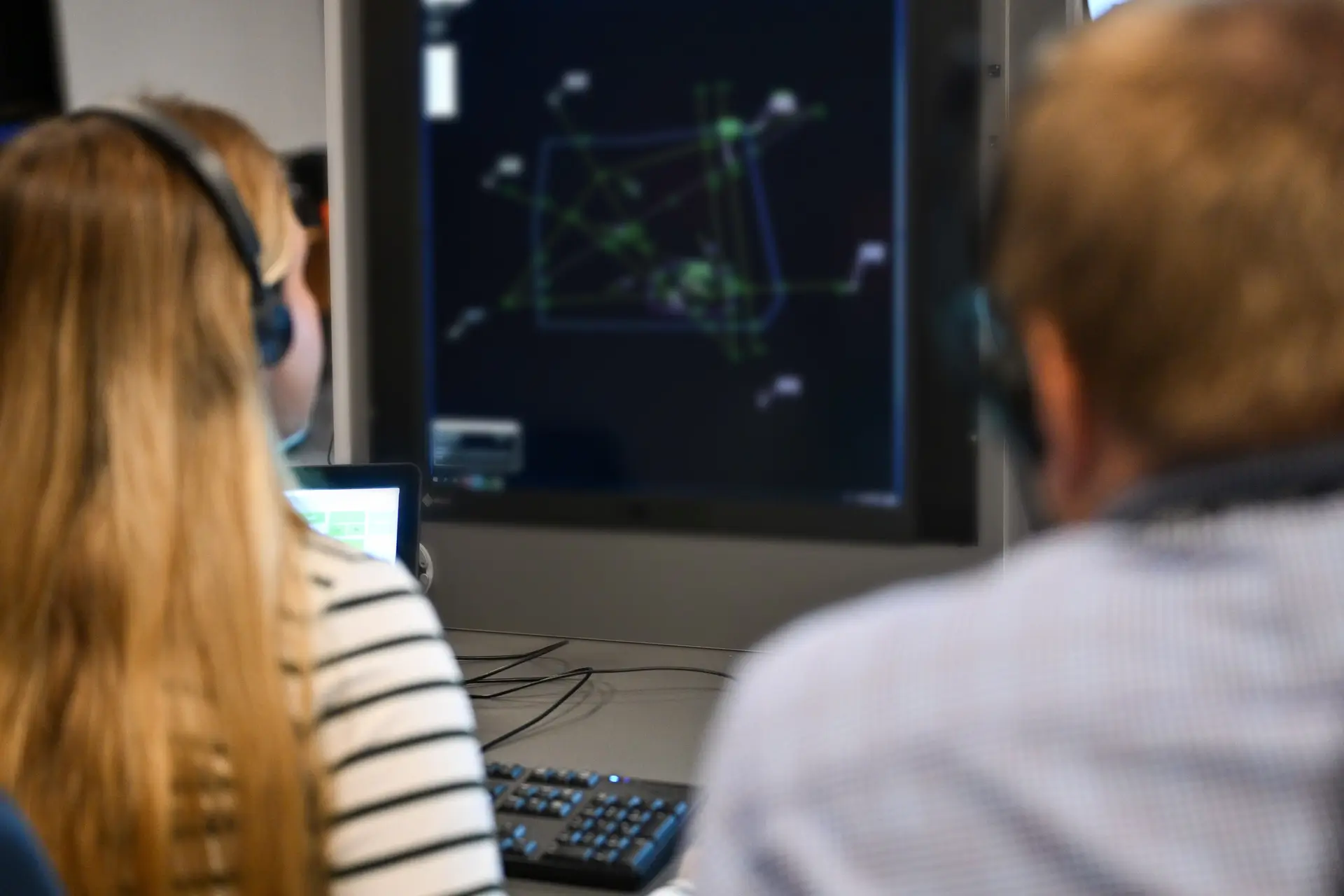
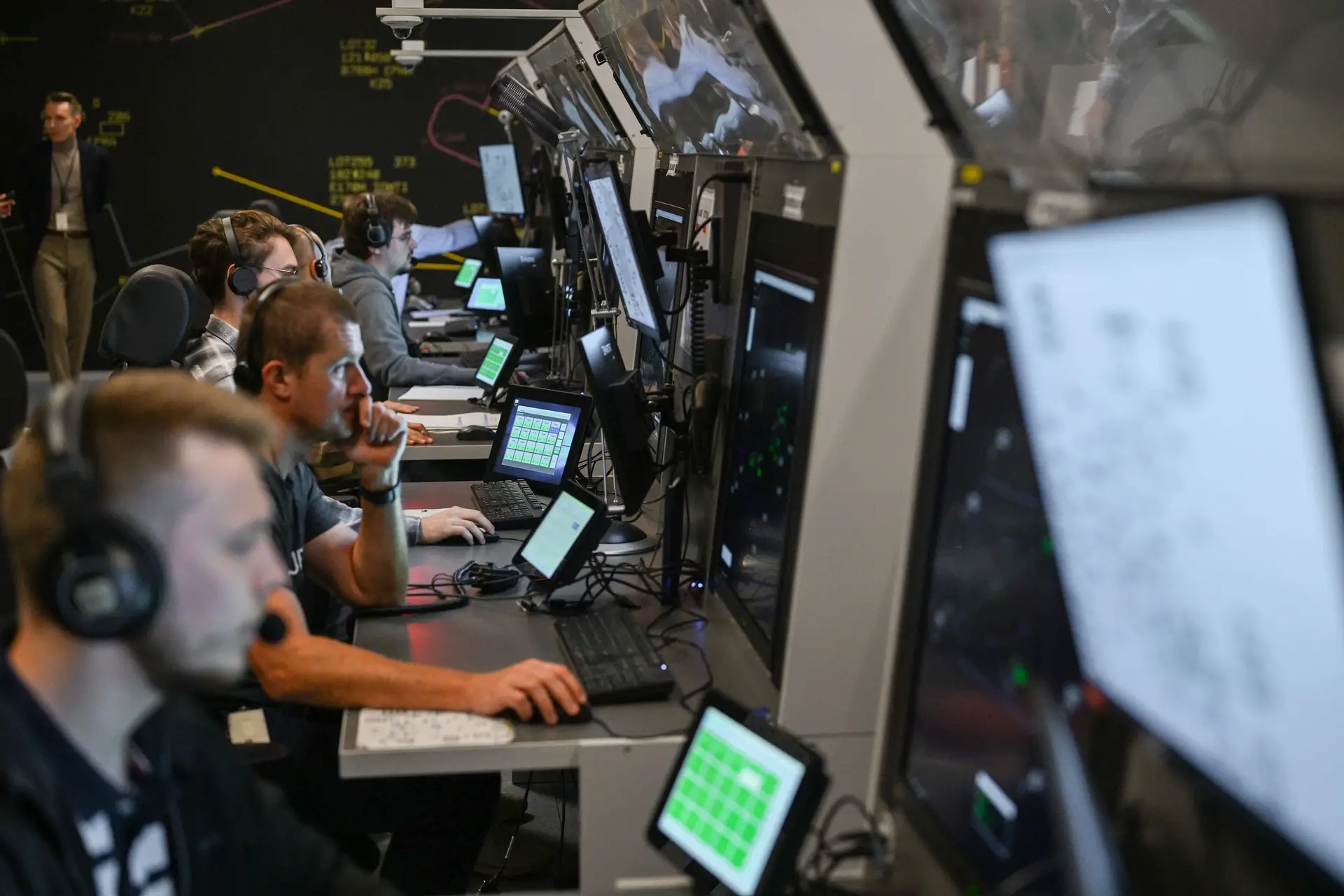
- The practical portion takes place on radar and tower simulators in a simulated environment; candidates learn and practice basic air traffic control techniques for each of the control services: tower, approach, and area.
- After successfully completing basic training, candidates are assigned to various units based on their performance to date.
Classification by Type of Authority
Upon successful completion of basic training, candidates enrolled in the air traffic controller course are assigned to specific types of control units (TWR, APP, or ACC) based on their performance to date and aptitude. Participants in the FIS information specialist course continue their training.
TWR – Airport Control Authorities
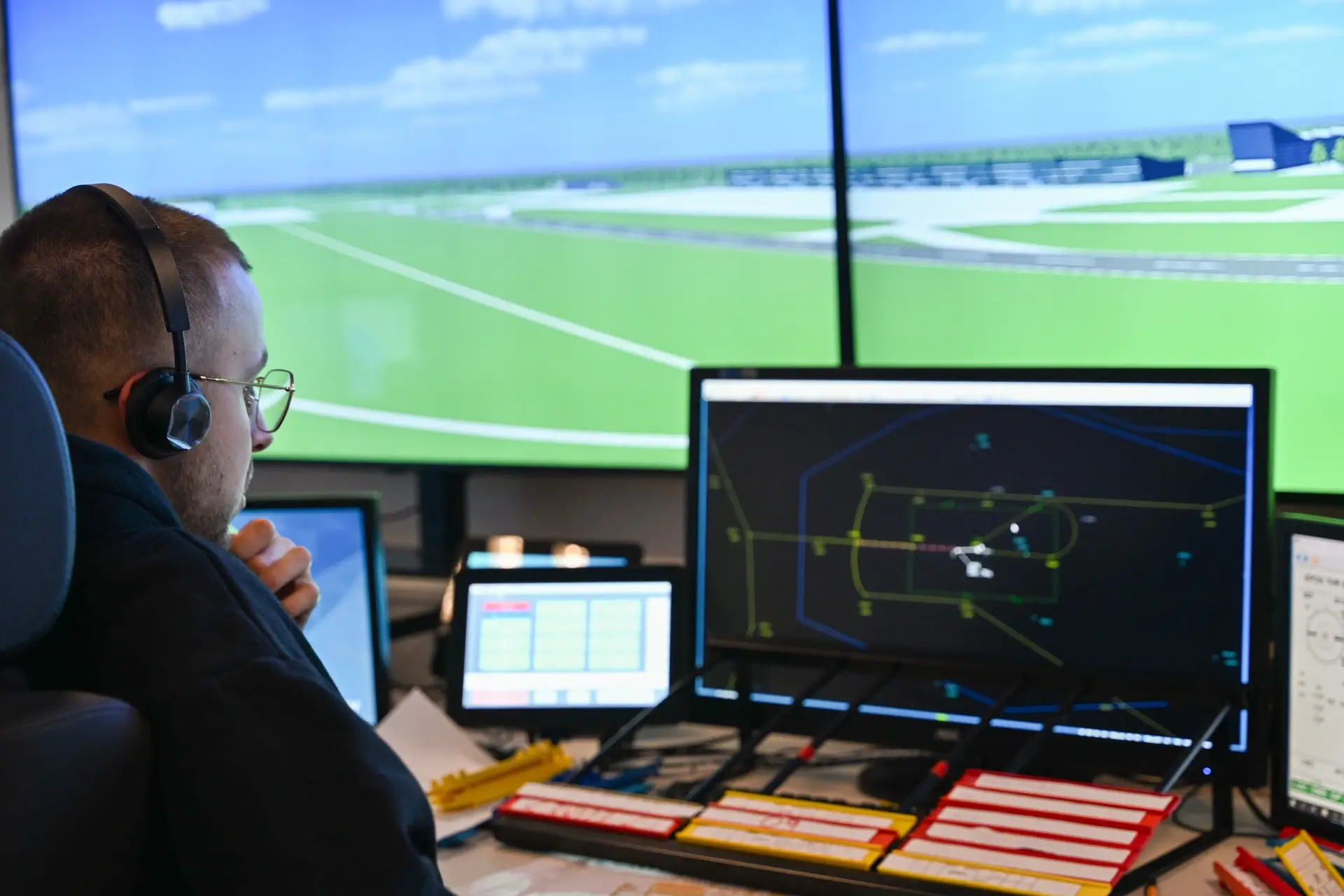
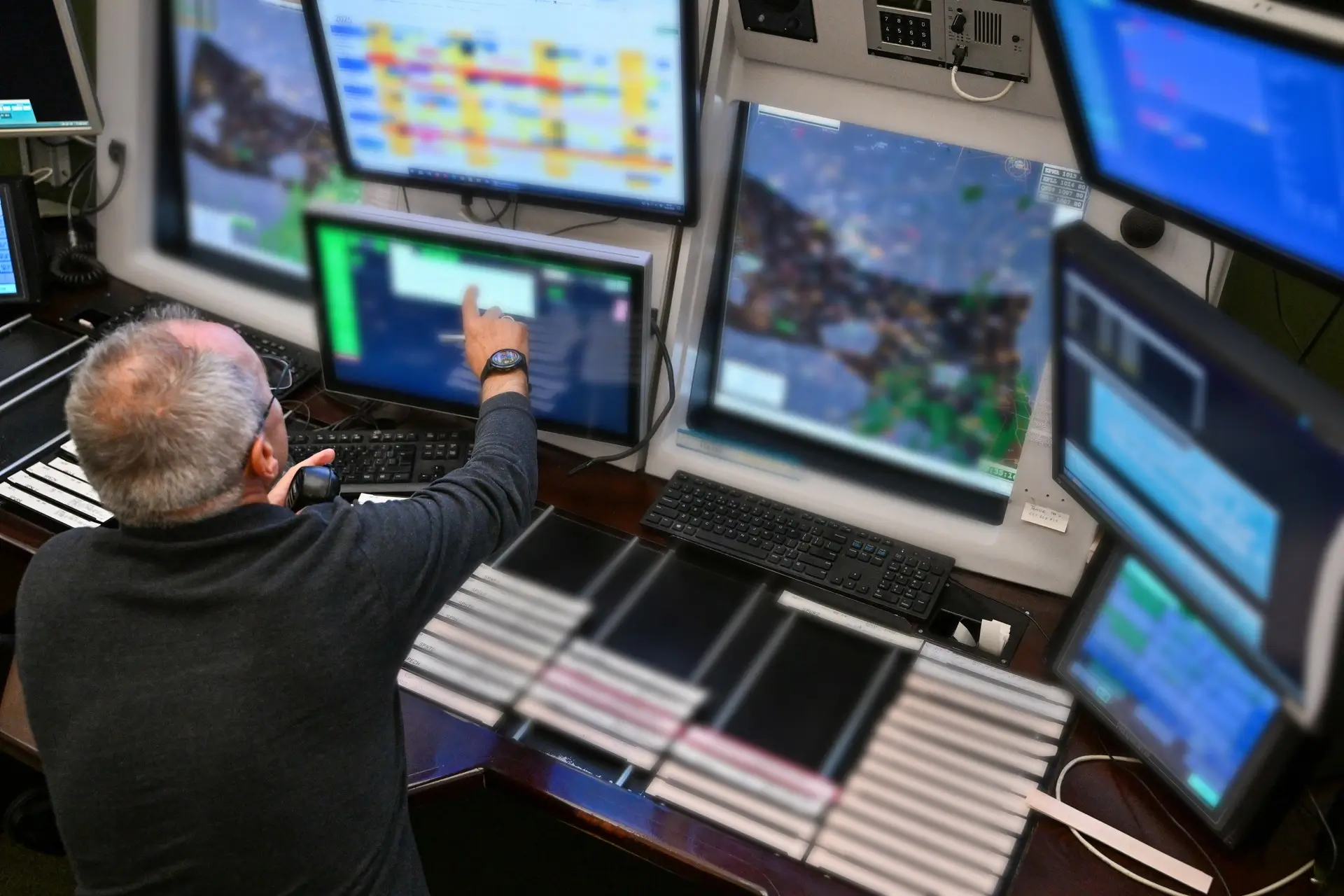
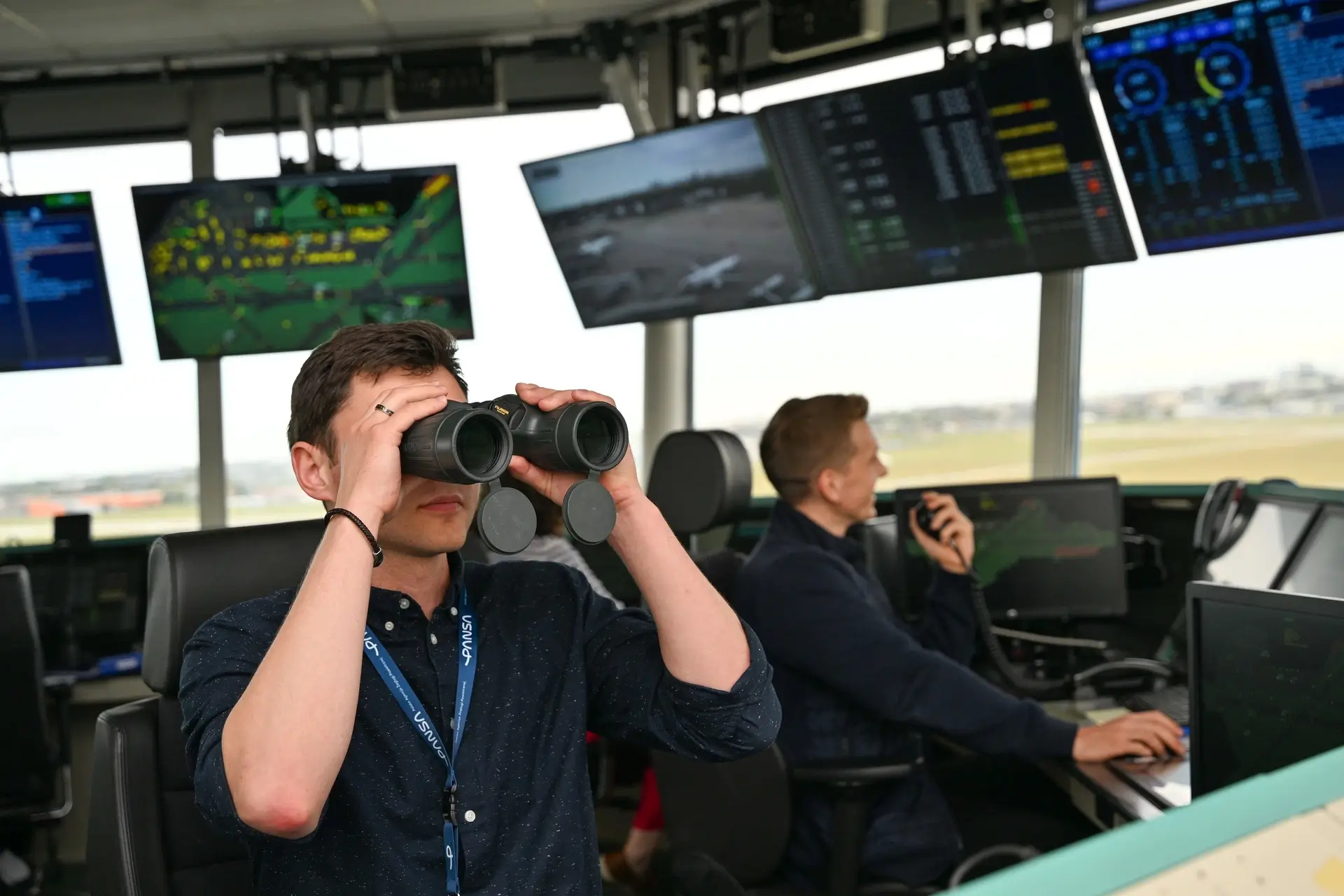
Air traffic controllers working in control towers are responsible, depending on the airport, either for traffic at the airport itself and in its immediate vicinity, or for traffic both at the airport and within the airport’s controlled airspace, which can extend up to about 4 km and cover a radius of several dozen kilometers. They decide which aircraft may take off, land, and which routes they should follow within the airport. They also ensure that aircraft in the vicinity of the airport fly safely. The job here involves coordinating the work of airport services and airlines. Multitasking is essential for success in TWR operations.
APP – proximity sensors
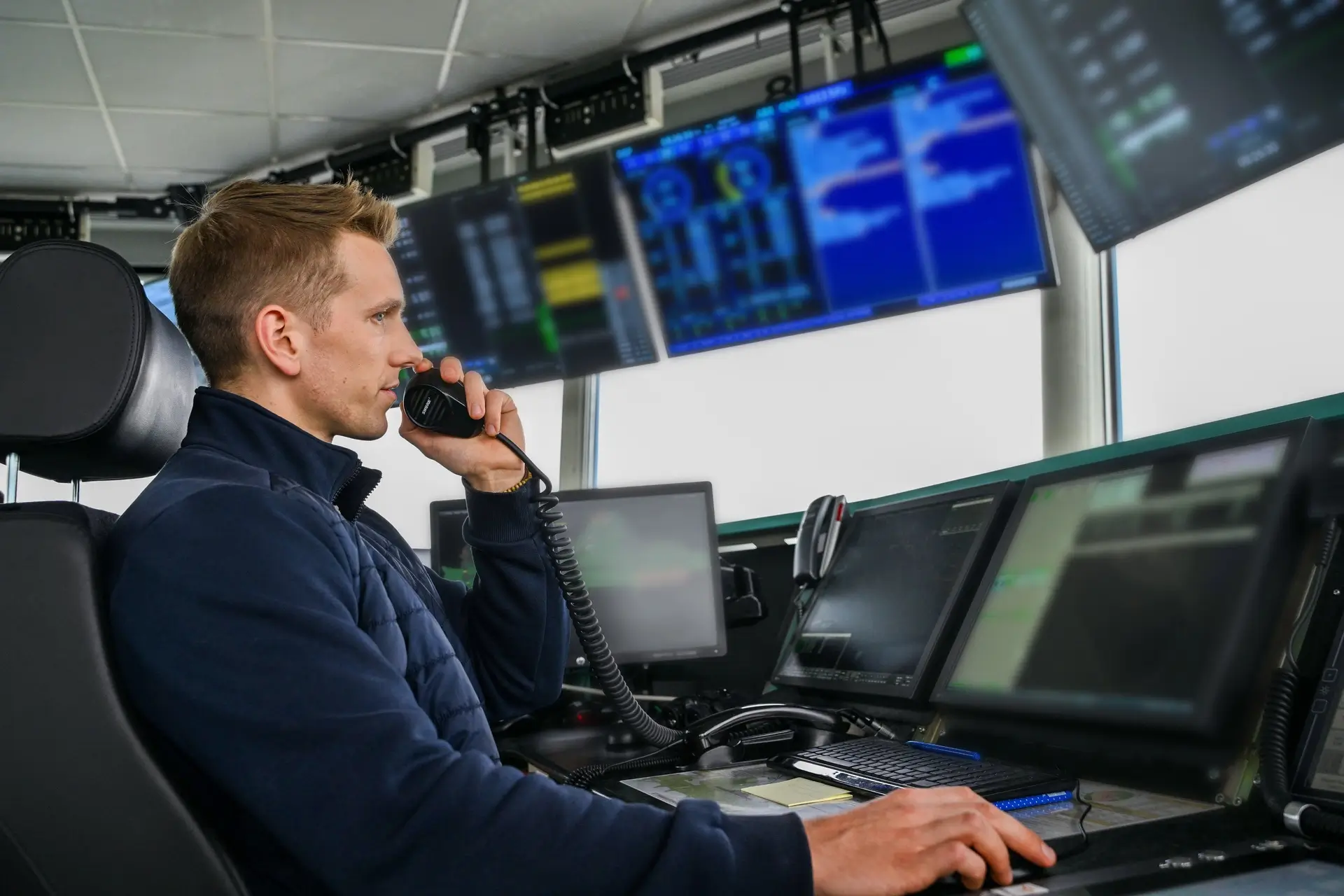
These are the air traffic controllers who use radar to direct the traffic of aircraft approaching for landing and departing from the airport’s controlled airspace. Colloquially and in short: they organize the landing queue and guide the aircraft so that each one has its own route and separation. They constantly coordinate with airport control (TWR) and with those who control high-altitude traffic (ACC). The work here can be extremely fast-paced, and decisions must be made immediately.
ACC – Area Control Authorities
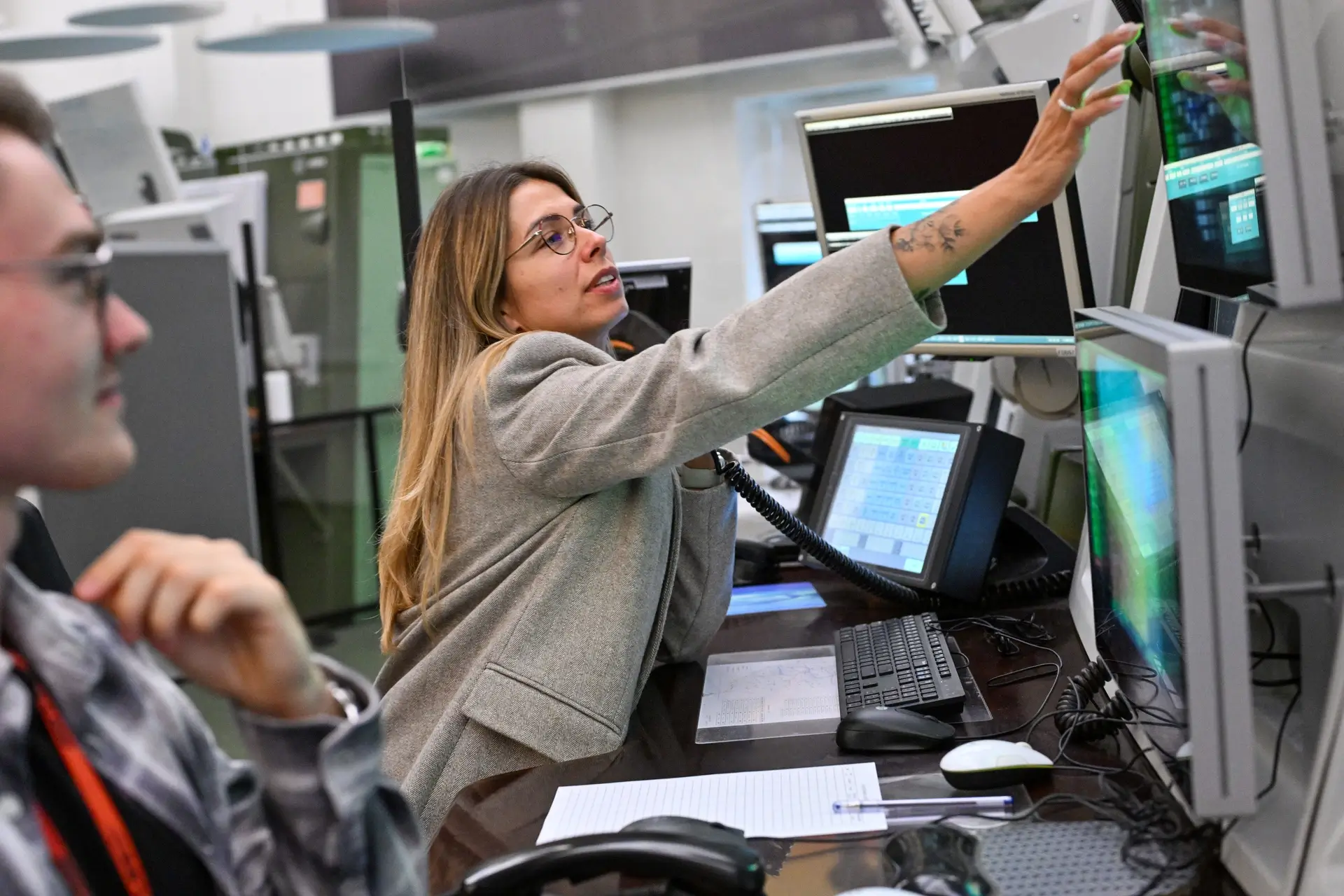
The command center for air traffic between airports and at high altitudes. The duties of air traffic controllers working in the area’s radar sectors include monitoring aircraft flying over Poland and to and from airports in Poland. Here, a single sector may oversee as many as twenty aircraft at a time. The key to success, therefore, is flawless planning several minutes in advance to ensure that chaos never ensues.
FIS/RIS – Air Traffic Information Services
These are the people who serve as the “extra eyes” for pilots flying at altitudes of up to about 3 km and outside of airports—that is, in uncontrolled airspace. They provide information about weather conditions, the movements of other aircraft, and potential hazards. The FIS in Poland also operates a radar service.
Training on Licensing (RATING)
After completing the BASIC program and being assigned to specific types of agencies, candidates proceed to training in the authorities required to work at those agencies:
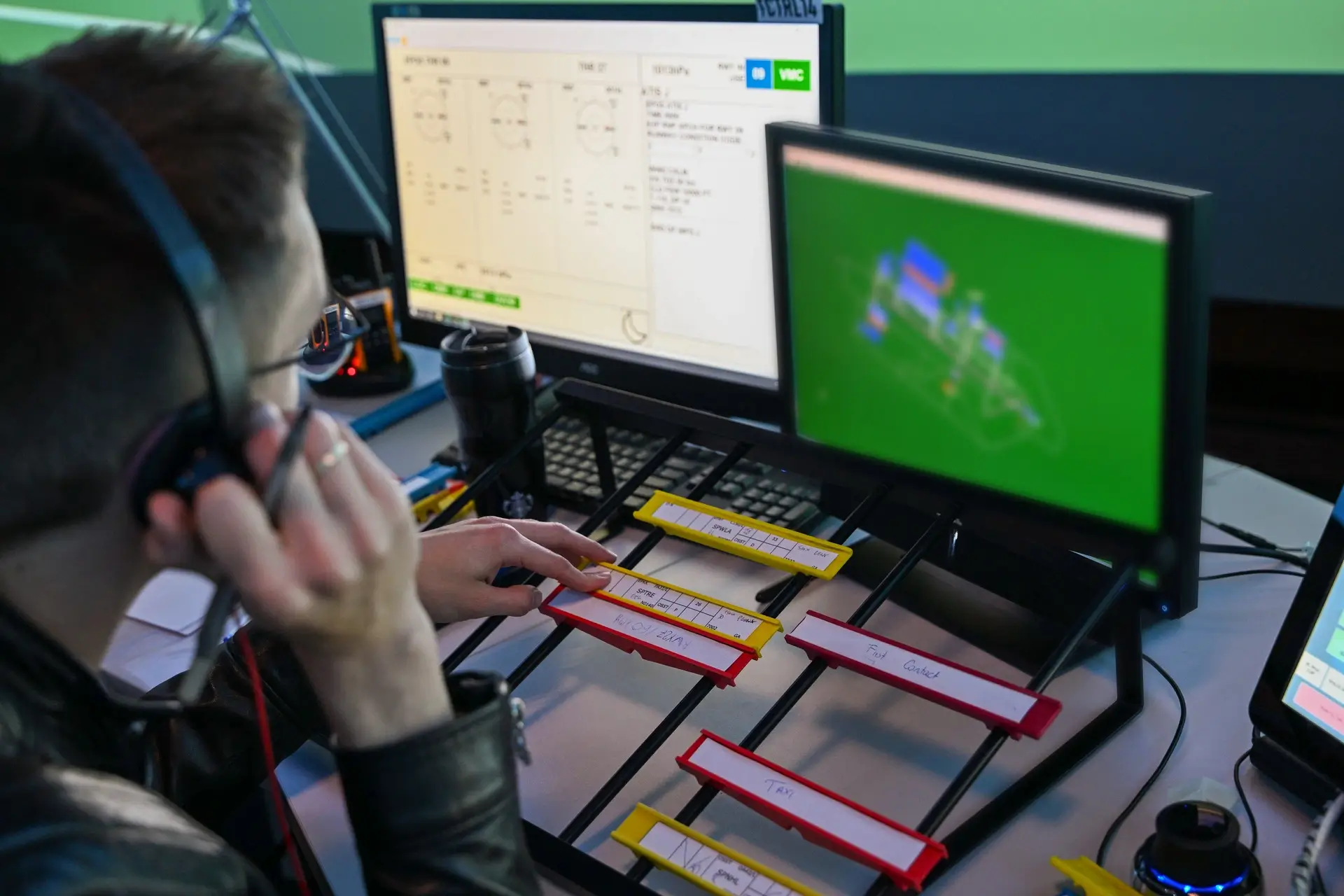
- ADC – Airport Control Rating – The course consists of 3 weeks of lectures and 10 weeks of practical training on an air traffic control tower simulator; the scenarios range from simple situations to high-traffic conditions, including night operations, winter operations, operations in reduced visibility, and operations using surveillance systems.
- APP – Approach Control Authorization – The course consists of 3 weeks of lectures and 4 weeks of practical training and prepares participants to work in non-radar approach control within a Terminal Control Area (TMA); candidates learn the challenging art of controlling air traffic based on crew reports and their own spatial awareness.
- APS – Supervised Approach Control Rating – the course consists of approximately 3 weeks of lectures and 20 weeks of practical training and prepares students to work in radar-based approach control; candidates learn, among other things, radar vectoring, conflict detection, and operations within a Terminal Control Area (TMA).
- ACS – Authorization to Control a Surveillance Area – This course consists of approximately 3 weeks of lectures and 20 weeks of practical training, and prepares participants to manage air traffic at high altitudes across multiple sectors using advanced surveillance systems and support tools.
- FIS/RIS – Candidates for FIS dispatchers undergo theoretical and practical training, learning how to relay information about traffic, weather, the configuration of Class G airspace, and how to coordinate with other services. The training lasts 8 weeks.
Training at the unit
After obtaining an S ATCL license or an FIS certificate, the candidate is assigned to a specific operational unit (control tower, TMA, ACC, FIS sector), where they begin unit-based training. The training consists of two stages.
Preparatory Training
It lasts about 2 weeks and includes familiarization with the unit’s Operating Manual, agreements with other agencies and services, the local layout, procedures, and equipment at the workstation, as well as a knowledge test before being cleared for further training in live traffic conditions.
Operational Training
This is hands-on work under the supervision of an instructor, divided into phases of increasing difficulty. Each phase has a specified minimum number of hours and allowable extensions, and the trainee’s progress is assessed in detail and on an ongoing basis and documented in training logs. The training concludes with an exam and evaluation in an operational setting, as well as an additional evaluation on a simulator covering abnormal and emergency situations.
Upon successful completion of the operational training, the ATS Personnel Training Center issues the candidate a certificate of completion, which entitles them to obtain an air traffic controller license from the Civil Aviation Authority. Upon receiving their license, candidates become air traffic controllers and may work independently at an operational post, assuming full responsibility for the safety of tens of thousands of passengers.
Recruitment of Candidates
If you’re wondering whether this is the right path for you, the first step is to participate in the Polish Air Navigation Services Agency’s recruitment process. During the process, you’ll go through a series of interesting and unique stages.
One of them is the international FEAST (First European Air Traffic Controller Selection Test), a modern, computer-based selection process for ATS training candidates, developed by EUROCONTROL. It does not require aviation knowledge—it assesses natural aptitudes that are crucial in an operational environment: concentration, speed of analysis, working memory, spatial reasoning, and decision-making under time pressure. The tasks are dynamic and demonstrate how you handle multiple stimuli at once and prioritize them. If you think this is a test for exceptional people, you’re wrong. New air traffic controllers at the Polish Air Navigation Services Agency are primarily young high school graduates, but also engineers, certified musicians, doctors, pilots, chefs, tram drivers, and auto mechanics. Almost none of them ever thought this job was for them. You might not know it either!
Before taking the test, make sure to get plenty of rest so you can maintain a steady pace. It’s also a good idea to familiarize yourself with the types of tasks on the official FEAST training platform beforehand, so that on the day of the selection process, you can focus on completing them rather than on the rules. FEAST helps you quickly and fairly assess your aptitudes. If you enjoy challenges and “live” situations, getting to know the platform could be your first step toward a career at ATS.
Find out why it’s worth it!
Every year, many candidates with varying levels of experience enroll in our introductory training courses. What they all have in common is curiosity, a willingness to learn, and a desire to take responsibility for ensuring the safe, orderly, and efficient flow of air traffic. It is precisely this—the tangible impact on air traffic safety and efficiency—that is the focus of all our training programs.
You can find the formal requirements and details of the recruitment process in the latest announcements from the Polish Air Navigation Services Agency.
Take part in the recruitment process.
A career in air traffic control could be the right path for you!