


Millions of Operations in Polish Airspace Over 18 Years of the Polish Air Navigation Services Agency (PANSA)
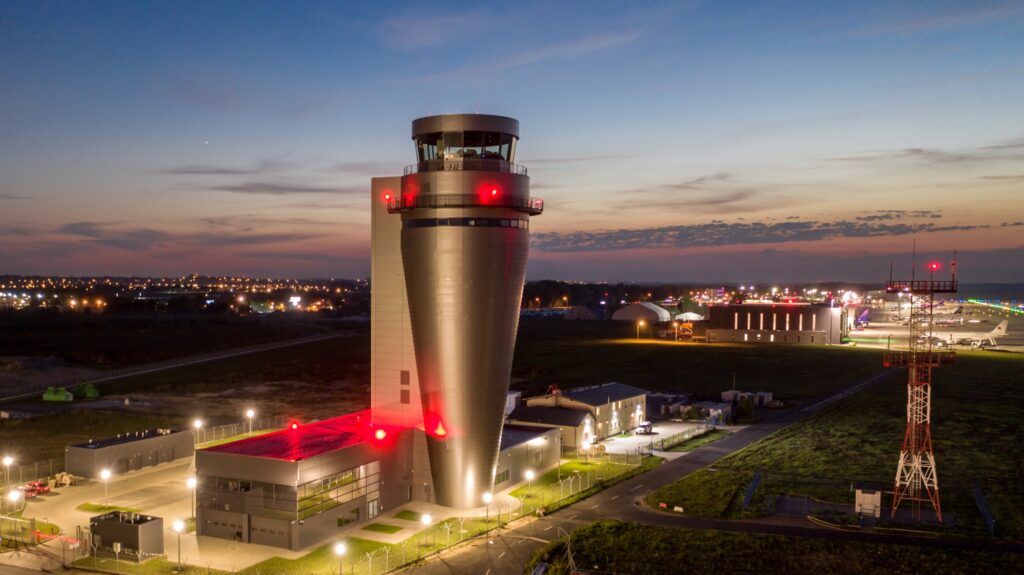
Over 6.2 million transit flights, nearly 4.9 million take-offs and landings, almost 3.5 million FIS operations, more than 2.7 million operations handled by the Warsaw air traffic control tower, and nearly a million logged at the Kraków tower. Aircraft under the supervision of Polish air traffic controllers have flown over 5 billion kilometers across Poland’s airspace during this time. On average, around 140,000 airline passengers are under the care of PANSA controllers each day—just a few numbers showcasing the effectiveness of the Polish Air Navigation Services Agency since its inception. Today, PANSA celebrates its 18th birthday. It is now a technologically advanced organization employing some of the most exceptional and highly skilled specialists in Poland.
To mark its 18th anniversary, PANSA is launching another training course for air traffic controller candidates. Still in April, a group of around 50 people—currently undergoing aeromedical examinations—will take their seats at the PANSA Training Center and begin the adventure of a lifetime: training for the unique and prestigious profession of air traffic controller.
For the first six months, they will study the theoretical foundations of the job, including air law, aircraft structures, and navigation principles. The following six months will focus on simulator-based training, where candidates will practice air traffic management in a controlled, simulated environment. After the first year, they’ll enter the practical training phase. Once assigned a specific area (en-route control, approach control, or one of 15 airport towers), candidates will begin OJT (on-the-job training)—a hands-on stage conducted under the supervision of experienced instructors, directly at the workplace. This phase will last a year and conclude with a state examination. After passing the exam, the candidate will receive a license and officially become an air traffic controller.
The average age of the candidates beginning training this April is 25. The group includes recent high school graduates, university students, and graduates of various fields, such as: aviation and aerospace, mechanical engineering and machine design, law, Romance philology, geodesy and cartography, IT, biocybernetics and biomedical engineering, transport, computer graphics, sports management, yacht design and construction, and journalism. A university degree is not required to obtain an ATC license. However, spatial imagination, the ability to make quick and confident decisions, the ability to work both independently and as part of a team, excellent English language skills, and perfect health are essential.
Over its 18 years of operation, PAŻP has trained around 400 air traffic controllers. With the addition of the incoming group, there will be a record number of approximately 200 candidates currently in the licensing process—something the Agency has never handled at this scale before.
The Polish Air Navigation Services Agency (PANSA) was established on April 1, 2007. It is responsible for the safe and efficient management of Polish airspace. One of its key responsibilities is providing professional air navigation services to airspace users. These services are used by pilots flying over Poland (en-route control), pilots approaching and departing from airports (approach control), and those performing take-offs and landings at the 15 controlled airports across the country where tower controllers are stationed. In addition to Warsaw, these include primarily Kraków, Gdańsk, Katowice, Wrocław, Poznań, and Modlin.
Beyond its core state-mandated task of air traffic control, PANSA is also responsible for delivering Flight Information Services (FIS), which support General Aviation pilots—those flying small private, recreational, or training aircraft. Additionally, the Agency includes a Drone Operations Center, which develops the tools necessary to support the rapidly growing number of drone missions. Over 18 years, drone pilots have registered more than 3 million check-ins required to legally conduct drone operations.
PANSA has a growing technological potential, used to develop various specialized IT tools that support air traffic controllers. It also includes a Technical Services Office responsible for the systems and tools needed to ensure aircraft navigation, surveillance, and communication. These include radar systems, radio communication facilities, and navigational equipment spread across Poland. Last year, PANSA carried out a record investment budget in the last 18 years—over PLN 275 million—in systems like these. Both in terms of amount and percentage (93.8%), it was the highest in the Agency’s history. Furthermore, by 2029, PANSA plans to invest approximately PLN 1.4 billion in total.